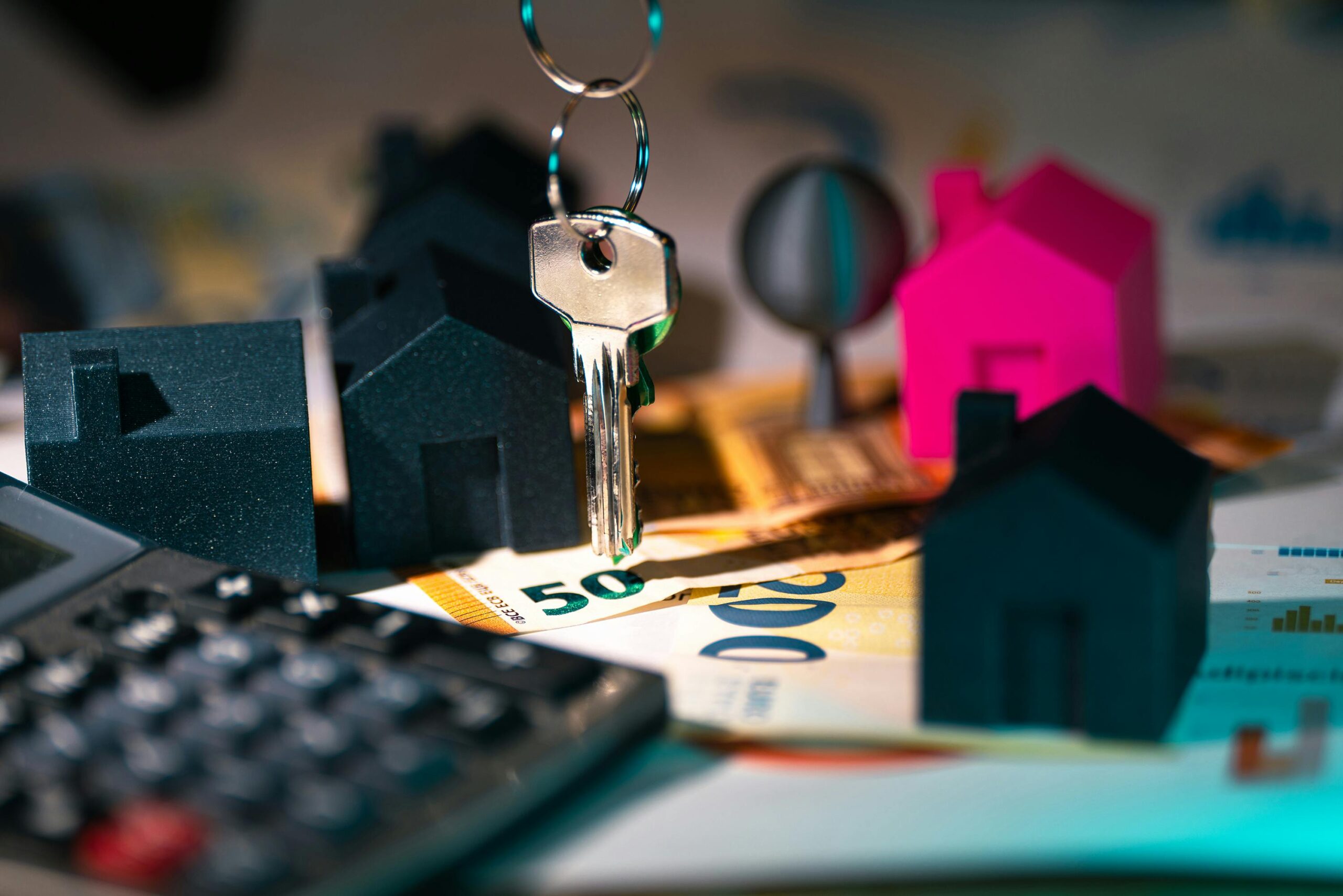

What does a renovation or finishing budget consist of?
What must you always consider?
Hidden materials most often purchased by professionals include materials such as plasters, gypsum, and tile adhesives.
Remuneration of the construction crew and additional specialists (e.g. gas fitter, chimney sweep)
Visible materials, i.e. those that we can see, such as tiles, panels,
- Equipment – our furniture, kitchen, wardrobes, but also accessories such as curtain rods,
- Carpentry work
Delivery costs
- Remuneration for specialist services for e.g. an interior designer,
Other: crew delivery costs, garbage collection, carrying in.


If you are planning to buy an apartment or build a house, it is worth adding the following elements to the overall finishing budget:
Commission for the intermediary
Notary fees,
- Surveying services,
The price of preparing the design with a building architect,
In this case, you will be able to create a budget that covers not only finishing or construction, but also intermediate activities.
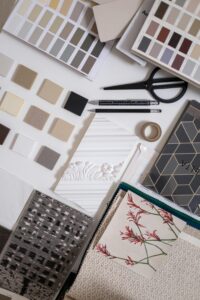
Hidden renovation costs – essential elements that we often forget about
Unfortunately, at every stage of finishing or renovation, we face expenses we hadn’t previously considered. These are often minor elements that, when added together, can significantly disrupt our budget.
What do we forget most often?
- Electrical equipment, and especially frames, which in most cases have to be purchased separately for sockets,
Adhesives and grouts needed for laying tiles, and waterproofing that protects the surface from water penetration. And if we provide full equipment to the professionals, we can expect that they will also need crosses and strips or profiles for even tile installation.
- brushes, rollers, foils and painter’s tapes,
- stretch foils to protect windows and doors,
protective cardboard to protect the floor,
- underlay for panels,
skirting boards,
silicones needed to protect fittings,
acrylic, for filling the gap between the skirting board and the wall,
- curtain rods, and in particular about clips for attaching curtains and drapes,
- Door frames and fittings. Very often, when looking for doors, we see the price for just the door leaf. It’s worth remembering that this price must include fittings, i.e., door handles and hinges. And in the case of doors to toilets, garages, and boiler rooms, the undercut is also included.


What is not worth saving on during renovation and finishing?
There are certain finishing elements that we should examine from every angle before choosing a cheaper alternative. Why? Because choosing a cheaper option could result in additional repairs or a complete replacement. Which elements should we pay particular attention to?
Door:
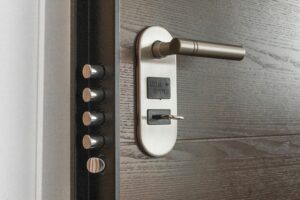
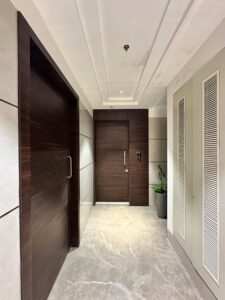
Remember that doors are an element that should last for years. Therefore, the more durable they are, the longer they will delight our eyes. If we’re looking for something quick or at a low price, we must be aware that when it comes to doors, price goes hand in hand with quality. The lower the price, the lower the quality.
Doors are not only about what’s on the outside (e.g., a beautiful white veneer), but also, and more importantly, what’s inside. Therefore, it’s worth checking what our doors are made of. If the interior is made of a low-quality board, this significantly impacts their durability. With the cheapest filling, such as a honeycomb core, we can expect the door to be quite delicate and sensitive to the slightest tug of the handle.
Are there exceptions? Always. We often hear that doors readily available in supermarkets are of very good quality. However, you should always verify this by carefully reviewing reviews of the model itself and the manufacturer online.
For external doors, the quality of the filling is also very important. It not only protects against warm air escaping from our home, but also provides a layer of sound insulation. This also affects the price, but on the other hand, it increases the comfort of our home. A difference in sound insulation of even 2 dB is clearly audible at the door.
Floors
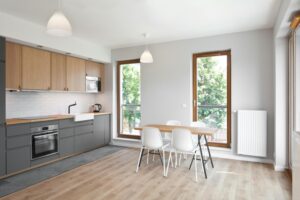
Floors are a finishing element that will stay with us for years, so it is very important to carefully check whether the model we have chosen will work well in our home,
When choosing laminate flooring, it’s worth considering its abrasion resistance class (e.g., AC3 or AC4). If there are no pets or children in your home, even an AC3 abrasion resistance class will be sufficient.
- If you dream of a wooden floor and are determined to install it, check whether the chosen wood species will suit your interior. Find out if it’s too soft and therefore susceptible to scratches or dents, or if you have underfloor heating, whether it will work well with it.
- Beware of marketing gimmicks. Yesterday, AC3 flooring panels were now labeled AC4 or even AC5. It’s always worth checking reviews of a given product on the store’s or manufacturer’s website.

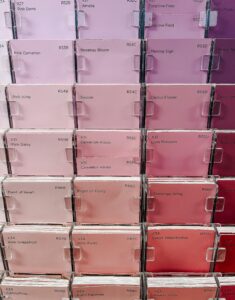
Paints
Although painting an apartment or house is relatively inexpensive, it’s worth remembering that painting the walls requires moving all the furniture, removing shelves, covering the floor, and covering the electrical outlets. These tasks, while not very labor-intensive, can be discouraging. Especially if you have to repeat them frequently because the color has faded or the walls are dirty.
To avoid this, we recommend using higher-quality paints that will last not only two, not three, but even five years without discoloration. It’s also worth checking their abrasion resistance to easily remove any abrasions or dirt.
Contrary to popular belief, higher-quality paints are better for our health. As paints dry, they release harmful volatile organic compounds (VOCs) or pesticides into the air. The poorer the quality of the paint, the more of these compounds are present. VOCs are carbon-based chemicals that cause a number of undesirable side effects on our health. They can persist in the air for up to 72 hours after application.