
Kitchen mishaps – what not to do when arranging?
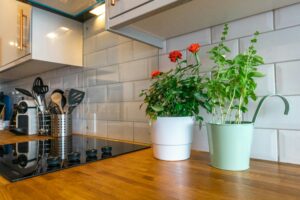
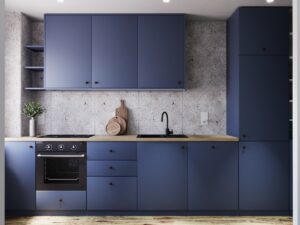
One of the most important rules of kitchen planning is maintaining appropriate distances, especially between the sink and the hob. This is important because when using the sink, you need a place to put washed vegetables and dishes. Similarly, when using the hob, you need space on the sides to place hot dishes. The minimum worktop width on either side of the hob is 20 cm, and the same applies to the sink. Such distances will allow you to use your kitchen freely without having to search for a place to chop vegetables or rinse pasta.
The kitchen work triangle determines the refrigerator’s position relative to the cooktop and sink. This is an important principle that facilitates movement around the kitchen and shortens the transition from one appliance to another. Whenever possible, it’s worth implementing a work triangle. One of the key advantages of such planning is the maximum utilization of the entire kitchen area and the efficient use of kitchen units.
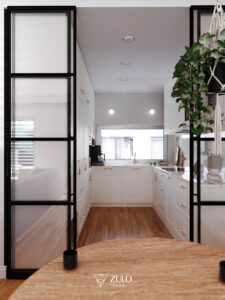
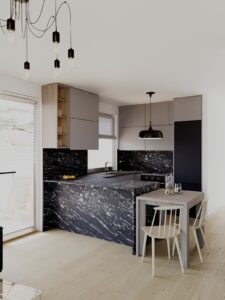
Another element of good kitchen lighting is its color temperature, which should be as natural as possible. Look for bulbs labeled 3800K to 4000K or “natural.” Be sure to also check the bulb’s wattage to ensure adequate light intensity throughout the room. In this case, overhead lighting should be between 200 lx and 300 lx (40W for a traditional bulb and 4-5W for an LED bulb), and lighting above the worktop should be 500 lx (60W for a traditional bulb and 6-8W for an LED bulb).
Ergonomics in the kitchen – the most important rules
If your kitchen is located in two kitchen rows opposite each other, they should be at least 90 cm and at most 120 cm apart,
The top edge of the worktop should be at a height of 90 cm. NOTE: Always adjust the worktop height to your height. If you’re short, consider whether it might be more comfortable to mount the worktop at a height of, say, 85 cm.
There should be a worktop between the refrigerator, sink, and hob for convenient storage of dishes and other items. This will facilitate movement around the kitchen and food preparation. The minimum distance between them should be no less than 20 cm.
In a kitchen, we should distinguish five zones: a supply zone and a storage zone (the pantry can take over these functions), a dishwashing zone, a food preparation zone, and a cooking zone. Arranging cabinets and planning their functions in this order will allow us to fully utilize the space and move naturally around the kitchen.
The minimum single-use length of a worktop should be 80 cm. In small kitchens, this isn’t an easy task, and this rule often has to be bent, reducing the length to 60 cm. Remember, the longer the worktop, the easier cooking will be.
What to choose for kitchen flooring instead of tiles? If you don’t want to use tiles in your kitchen, vinyl planks imitating stone or wood are an alternative solution. Depending on your preferences, you can freely choose the available pattern and format, creating a durable and resistant floor.