
Minimalism in Interior Design – Does Less Really Mean More?
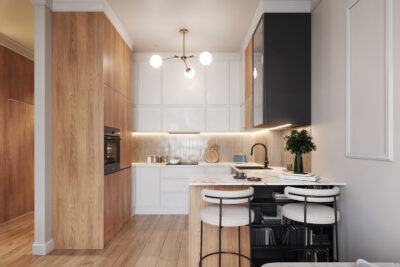
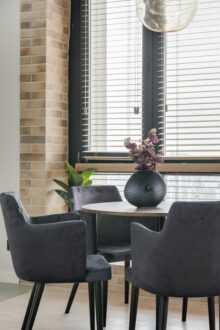
Minimalism has been highly popular for many years. Its principles may seem very simple – limit the number of items and keep only what we really need. In reality, creating a minimalist interior is not that simple. It is not enough to get rid of unnecessary things. In a minimalist interior, colors, materials, and space organization also play an important role. What challenges does designing an interior in this style involve and, above all, what are the characteristics of a well-designed minimalist interior?
The History of Minimalist Style
To truly understand minimalist style, it is worth going back to its roots and learning about the history of minimalism. Its origins can be traced back to modernism and other artistic movements that developed in the early 20th century. The Bauhaus and De Stijl movements played a major role, emphasizing simplicity, geometry, functionality, and a significant reduction of ornamentation.
The Bauhaus school revolutionized the way art was combined with functional design. It focused on creating objects that were primarily functional, while also being remarkably simple. Just as in contemporary interiors, the emphasis was placed on clean forms and geometric shapes.
The De Stijl movement also had a profound influence on the development of minimalism in interior design. Its creators simplified spaces into basic forms, lines, and planes. Contemporary minimalism is a direct development of these ideas – these movements shaped the principles that define minimalism today.
What Defines Minimalist Style in Interior Design?
Minimalist style is primarily characterized by three things:
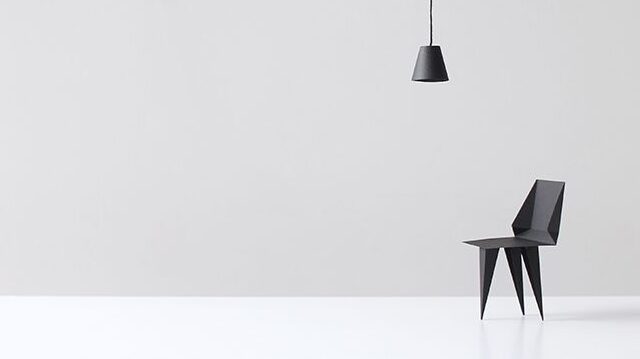
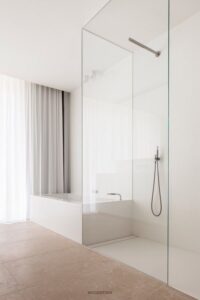
- Simple forms: In minimalist interiors, it is very important to limit complex shapes and unnecessary details. This makes individual elements look almost like sculptures. Simple forms prevent furniture and accessories from overwhelming the space. Instead of numerous decorations, attention can be drawn to the interesting shape of an armchair, lamp, or table.
- Functionality: Every element should have a purpose and meet specific needs. Aesthetics stem from function.
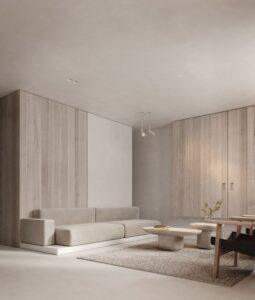
- Storage space: Although it may seem as if the owner of a minimalist space does not own any belongings, this is not true. There is plenty of storage space, but it is very well hidden.
source: pinterest
Frequently Asked Questions
Does minimalism in interior design mean having no decorations?
No. A minimalist interior does not mean having no decorations at all. However, decorations are significantly limited. Instead of many smaller accessories, the focus is usually on one interesting piece of artwork, a lamp, or a plant. The interior should be simple, not empty.
What colors work well with minimalist style?
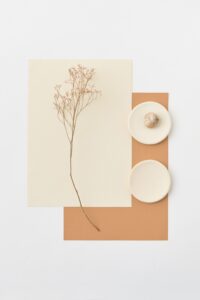
The colors that work best with minimalist style are muted tones such as white, beige, gray, black, and wood tones. However, you can also opt for bolder colors when using them as a single accessory or accent.
Can a minimalist interior be cozy?
Of course. You can create a cozy atmosphere by using wood, soft fabrics, rugs, and curtains. Warm lighting is also extremely important.
What materials are used in minimalist style?
Popular materials include wood, stone, concrete, glass, and metal.
Want to Enjoy a Minimalist Interior?
If you’re looking for an interior designer to create your minimalist interior, get in touch with us. We’ll combine your preferences with your needs and functionality to create a space tailored to you.