
Small decisions, great effect – the secrets of perfect interior finishing
1. CURTAIN ROD. Which one to choose and how to hang it?


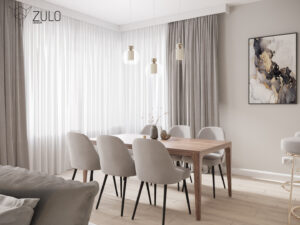
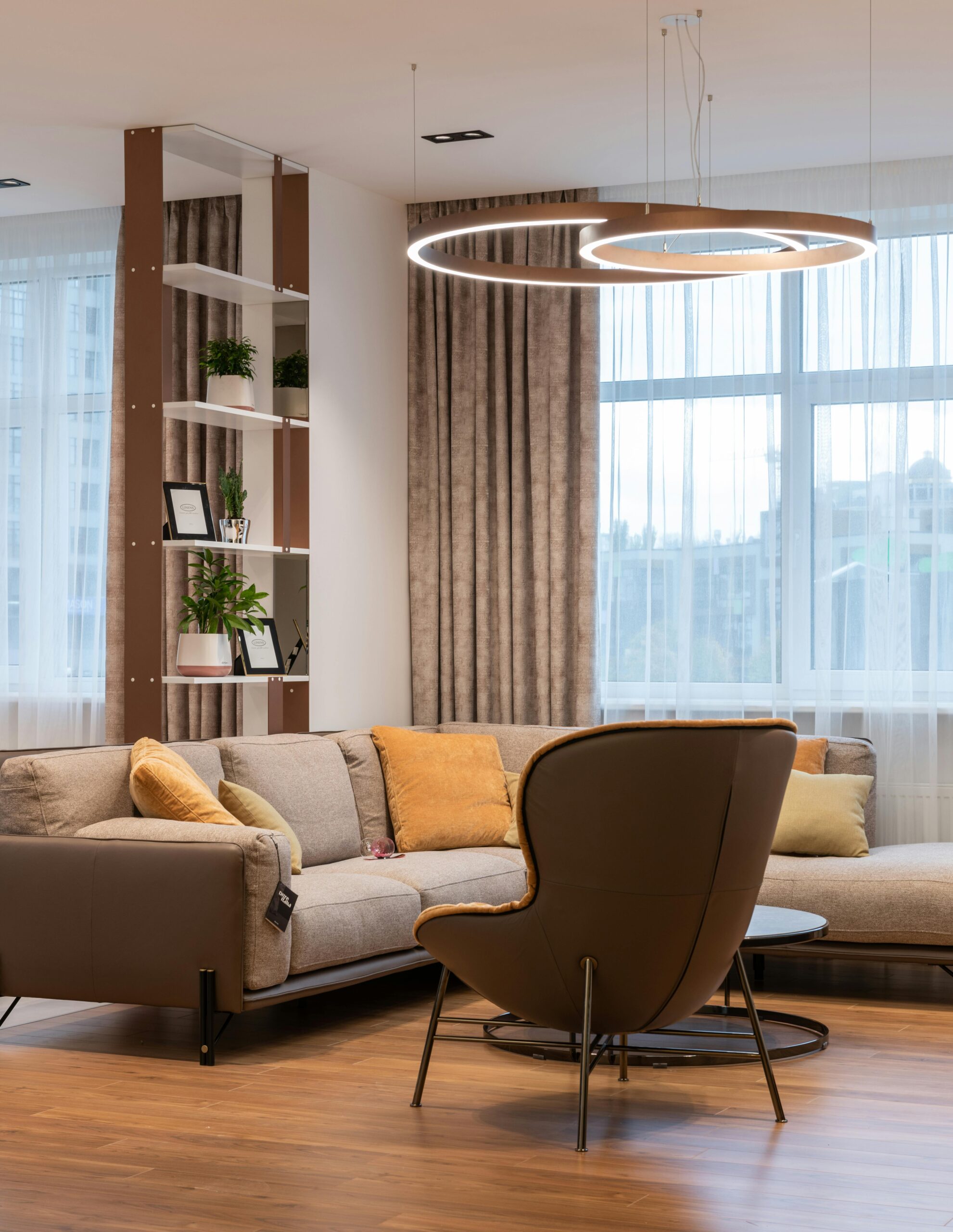
A curtain rod, or something for hanging curtains or drapes, doesn’t have to be a tube suspended from a hook. Instead of traditional curtain rods, you can find ceiling-mounted curtain rods or built-in rails. There are many solutions, and depending on the style of your interior, you can choose the right one.
When choosing curtain rods or built-in rails, it’s simple – simply screw them to the ceiling about 15 cm from the wall with the window. If the rail is single, even 10 cm is enough for the curtain to hang properly. The problem arises when you’re using traditional curtain rods. Here, you need to measure the appropriate distances.
2. SKIRTING BOARDS. Types and selection method.
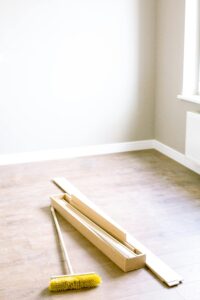

In stores, you can find the most popular PVC moldings, matched to the floor color, and MDF moldings, most often white. In addition, you can also find:
- Wooden moldings – most often made of softwood, which gives them their light color. They can be painted in any color, making them suitable for virtually any interior. They are not as curved as PVC moldings, but are available in a wider variety of shapes: you can buy them in concave, quarter-round, or triangular cross-sections. However, it’s worth paying attention to the number of knots – the fewer they have, the better the quality and therefore the durability of the moldings.
- Polystyrene moldings – made of a material similar to Styrofoam. They are originally white, but can be repainted any color. They are very durable and resistant to damage. Furthermore, any damage can be easily repaired with a special sealant.
- Metal moldings – once used exclusively in industrial interiors, now also used in homes. Most often, they are made of steel or aluminum. Due to the material’s properties, they are less flexible, but the most durable.
- Skirting strips – most often used to connect carpet to the wall, but also work well with other types of flooring. This is the cheapest and quickest installation method, covering the floor’s expansion joints.
How to choose skirting boards?
- The simplest rule is to match the skirting board color to the windows and door frame, or
- to the door frame itself if the windows are an unusual color.
- The second option is to match the skirting board to the floor color. This is still a popular solution, although not as popular as it was 10 years ago. The downside of this solution is that it shortens the room’s height and creates no clear boundary line separating the wall from the floor. A visible boundary makes the interior more refined and elegant.
- You can also match skirting boards to the color of the furniture, although this is much more difficult.
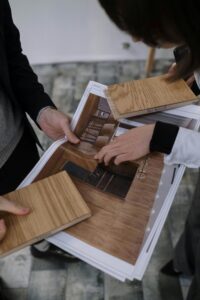
3. SOCKETS. Modern or traditional?
Traditionally, in most homes around the world, outlets are white. This isn’t a cultural thing; white outlets are simply the most readily available and cheapest. Nobody wants to pay thousands of dollars for something so insignificant at the end of the job.
However, in certain situations, a different outlet makes a huge difference. Especially between kitchen cabinets when the tiles or other materials are not white.
What new sockets are worth looking for?
- Stone sockets, matching the color of the stone on the wall
- Glass-panel sockets, rectangular or round
- Vintage sockets
- Metal sockets
- Wooden sockets
4. JOINING FLOORS AND EXPANSION JOINTS. How can this be done nicely?
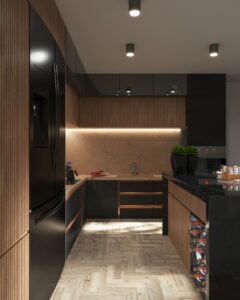
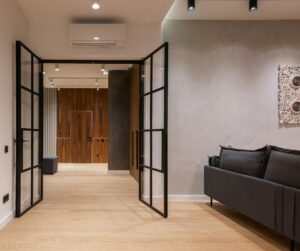
If you want to connect two different types of flooring, for example, panels with tiles, you can do so using:
- narrow or wide oval connector strips
- ramp connector strips, ideal for situations where the floors to be joined are not at the same level
- screw-down slope connector strips
- T-shaped connector strips. These strips are available in various widths. Thanks to their construction, they are practically invisible at the joints
- using silicone matching the color of the tiles or floor – however, this is only possible if the panels are properly aligned with the tiles
5. DON’T FORGET ABOUT…
If possible and appropriate to the style, we install curtain rails or curtain rods with covers everywhere. This is the most aesthetic solution and provides the greatest impact.
In stairwells, hallways, and utility rooms, we recommend metal strips to protect the wall from stains.
Metal strips don’t absorb water, making them more durable in high-traffic areas.
If the investor’s budget allows, we also offer metal strips in all types of rental apartments. This protects the appearance of your investment for many years
Above the kitchen countertop or bathroom countertop, we match the sockets to the color of the tiles or other wall material. This ensures the sockets are unobtrusive and aesthetically pleasing.
We discuss the finishing strip we want to use with the specialists right from the start of the flooring installation, so they can plan the placement of the panels or tiles to achieve the proper expansion joint.
It’s not worth overpaying for curtain rods. A higher price usually translates to a change from plastic to metal. In some cases, a more expensive curtain rod means easier installation. However, this doesn’t necessarily mean the material will be durable.