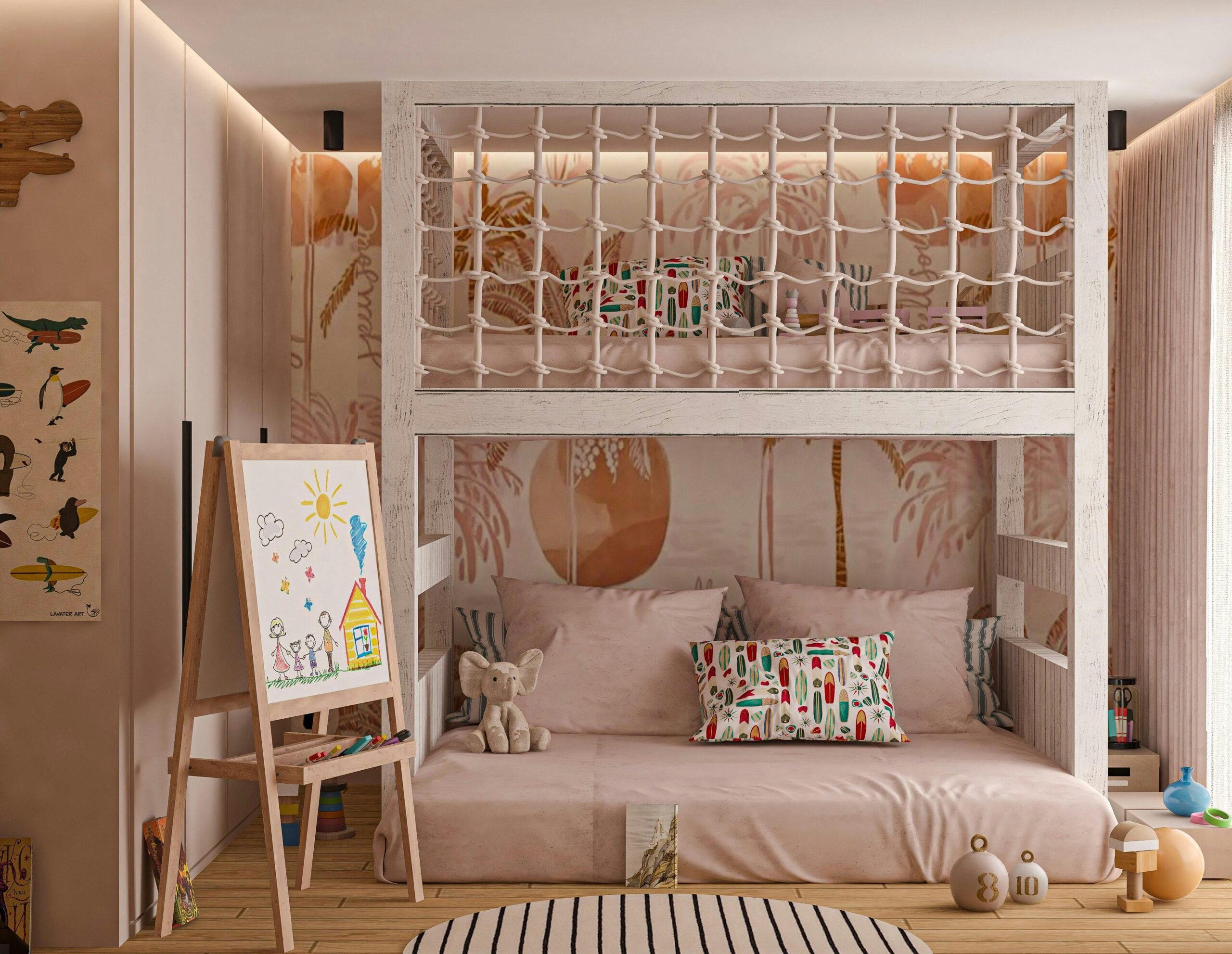

The perfect space for kids – practical tips
6 things you need to remember when decorating a child’s room
- First of all, a child’s room belongs to… the child. While this may seem obvious, parents often forget this, absorbed in catalog inspiration. A child doesn’t need a ton of decorations to thrive. On the contrary, the more space we leave for a child to fill, the better it will impact their development.
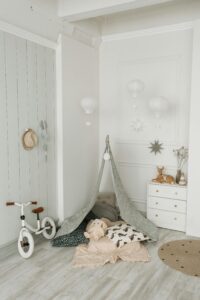
A child’s room can even be white and consist entirely of furniture purchased at a department store. Why? It’s easy to replace a damaged piece or completely replace the furniture without feeling like you’ve wasted money. And white is a great base for colorful toys and accessories.
- Remember to choose the right materials. Use those with the most natural ingredients. This applies to both paints and floors.
- If you choose traditional furniture, remember to screw it to the wall. Children love to climb, so it’s worth protecting the furniture from falling
Use appropriate covers for protruding corners and sockets.
Never use radiator covers with holes cut into them. This could pose a risk for a child to climb onto the windowsill, which is not ideal.
What materials should you choose for a child’s room?
- Try to choose materials that are as natural as possible. Cheapest paints and panels are not a good idea, even for adults, due to the volatile organic compounds they release (more on this in the article about paints)
- It’s best to choose blankets, bedding, or sleeping bags made from real cotton, bamboo, or linen. Cotton is pleasant to the touch and breathable. Bamboo and linen, on the other hand, have antistatic and thermoregulating properties. The carefully selected composition of these materials ensures the highest quality,
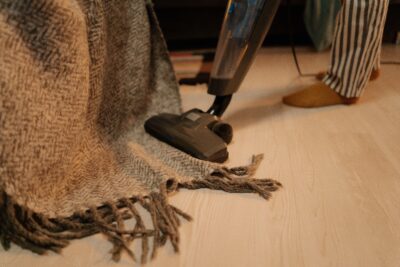
- If you’re choosing carpet, look for one that’s easy to clean. Coconut fiber carpets are a great option, as they’re not only pleasantly soft to the touch, but also repel dirt and stains
- If you prefer something more traditional for your floor, consider vinyl planks. Good quality vinyl planks are antistatic and handle impacts much better than traditional wood planks.
It’s a good idea to cover windows with traditional roller blinds. Hanging curtains and drapes can be tempting to climb up or pull them down
To make your child’s room more attractive, you can use blackboard paint for drawing with chalk on one of the walls or black and white wallpaper that will serve as a large coloring book
- When furnishing a child’s room with unfinished wood furniture, look for hardwoods like oak. Hardwood furniture is more durable and resistant. Plus, you can always repaint it, just be sure to use paint that’s suitable for children.
Or maybe a separate bathroom for the child?
Advantages:
In a child’s bathroom, smaller toilets and lower heights are installed, making it much easier for your child to use them.
A separate bathroom for your child can help them learn independence more quickly, and carefully planned functions can help you bathe your child.
If your child has their own bathroom, it’s easier to keep it clean.
You’re not condemned to bathing with ducks and dinosaurs, who have a clearly defined place.
Disadvantages:
A bathroom is a significant expense, so creating a dedicated bathroom for a toddler is only worthwhile if there’s more than one child in the house.
After a while, every child will outgrow it, so you need to be prepared to adjust the height of the sink or toilet.