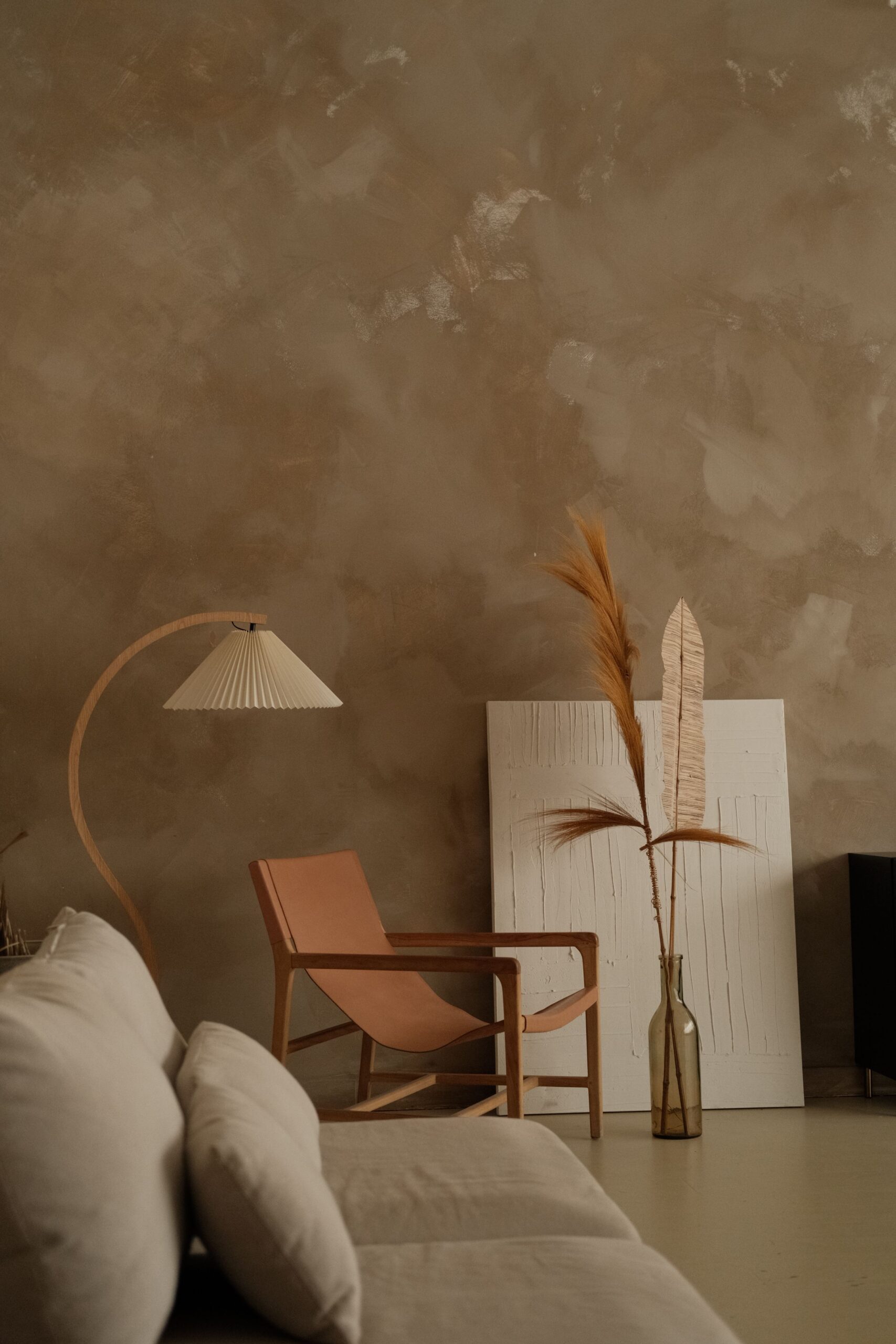

How to transform an interior with decorative wall finishes?
What types of wallpaper can we find and where are they used?
These are perhaps the most popular types of decorative walls, known for centuries. Initially, hand-painted murals served as wallpaper, but as technology advanced, they began to be replaced by large-format paper prints. Currently, paper wallpapers, though still used, are in the minority. Non-woven (vinyl or textile), fiberglass, and spray-on wallpapers are more popular.
- Vinyl wallpapers with non-woven backing are particularly suitable for rooms with high humidity. Thanks to their construction (the backing is made of non-woven fabric and the top layer is made of polymer fibers), they are waterproof, durable, and easy to clean. However, it’s worth remembering that smooth vinyl wallpapers with non-woven backing are suitable for smooth walls. If the wall has any irregularities, it’s worth using a wallpaper made of foamed vinyl. This helps conceal bulges or scratches. Furthermore, vinyl wallpapers are usually easy to remove.
- Textile wallpapers, including those made with non-woven backing, are produced using readily available fabrics and materials. Silk, linen, cotton, satin, velvet, or velour are used in production. Textile wallpapers made of synthetic fibers, such as polyester or viscose, are also available. Textile wallpapers are ideal for finishing living spaces where temperatures are constant. Because they can be made from natural materials, they are among the more expensive options. Textile wallpaper patterns are often designed by renowned designers, which also influences the price.
- Fiberglass wallpapers are the most common type of wallpaper found in home improvement stores. Their relatively low price (although it all depends on the manufacturer) and wide application (especially in secondary market buildings) offer many finishing options. Fiberglass wallpapers consist of thin threads made of molten or liquid glass. Thanks to the weave of the threads, the wall can still breathe, despite the wallpaper itself being a synthetic product. Furthermore, these types of wallpapers are exceptionally durable and resistant. They can easily conceal any imperfections and cracks in the wall. Although they can be applied to any surface (concrete, drywall, wood), they are difficult to remove. Very often, such wallpapers come off with the plaster during removal. Furthermore, the application process itself is time-consuming and requires patience.

What are spray wallpapers?
Unlike other types, spray wallpaper comes in the form of a semi-liquid mass or powder. You can find spray wallpapers in stores that contain natural ingredients (cotton, silk, clay blends) or synthetic ones (acrylic resin blends).
Natural spray wallpapers come in a powder form and create a rough texture after application. They are not resistant to water and moisture, requiring impregnation or varnishing after application. Synthetic spray wallpapers are immediately semi-liquid and create a smooth or slightly rough texture on the wall after application.
Spray wallpapers are applied to the wall using a pneumatic gun, which ensures even distribution of the material. This application creates a uniform surface (no visible joints) that is easy to clean.
Synthetic spray wallpapers are abrasion-resistant, making them suitable for use in offices and stairwells. They adhere not only to concrete but also to pipes and radiators. Any type of spray-on wallpaper can be repainted in any color, even after being varnished. The biggest drawbacks are the difficulty in removing it and the limited color range, especially with synthetic spray-on wallpaper.
Microcement, architectural concrete or maybe clay?
- Microcement is a thin-layer mortar used to achieve a decorative effect on walls and floors. Microcement is most often made from cement with added resins (polymers). This composition allows for the application of a very thin layer of the material. After application, the surface must be varnished. The varnish determines whether the final effect will be glossy or matte.Microcement can be used on floors and walls. Properly sealed, it can also be used in rooms with high humidity or bathrooms. Brave people even use it on kitchen countertops. While this can be done, it’s worth remembering that it will be constantly exposed to friction, abrasion, and coffee or tea stains.One of the greatest advantages of microcement is that it can be used to create a very interesting texture on walls. Furthermore, it has high adhesion to the substrate, is seamless, and its natural thickness does not exceed 3 mm. Furthermore, it can be applied to virtually any s
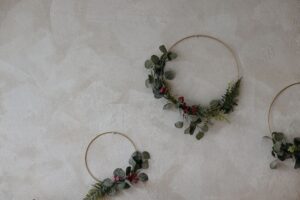
- Architectural Concrete is a mixture of cement, water, aggregates, and enriched with pigments, fillers, and plasticizers that give it the desired properties. The combination of the above-mentioned ingredients creates a material with a natural, raw appearance. Depending on the preferences, pits, abrasions, and streaks may appear on the concrete surface. Architectural concrete is characterized by low water absorption, but it can absorb water upon direct contact. It is not resistant to splashes and grease stains.Contamination should be removed promptly to prevent stains from penetrating the material. To maximize stain protection, the concrete can be impregnated using appropriate products (which can be quite expensive). However, concrete is not resistant to impacts and scratches, especially from sharp objects.Architectural concrete on a wall can appear as a smooth wall or a surface with abrasions and pits. It can also be used to imitate boards and joints to give the wall a more unique look.

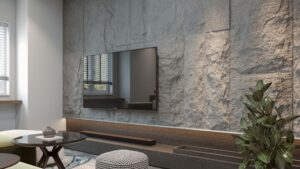
- Clay is not a new concept, but rather a return to the technology used by our great-grandparents in a slightly improved form. Textured and decorative clay plasters are a friendly solution for anyone who wants a natural effect on their walls.
Clay plasters are very similar to ordinary plasters found in stores. The main difference is the product’s composition (natural clays, ore, and water) and the fact that after application, walls and ceilings do not require painting. Furthermore, clay plasters can be available in a variety of pastel colors, giving the interior an interesting and unique look.
Depending on their intended use, we distinguish clay plaster bases, which are applied over raw finishing materials (concrete, brick). They also provide a substrate for topcoats. Topcoat plaster is a finishing element that gives the surface a distinctive appearance (structure).
Clay plasters are antistatic and do not emit volatile organic compounds. They are ideal for allergy-prone spaces. Additionally, the clay itself can be formed into appropriate slices, which, when attached to the wall, create a unique effect.