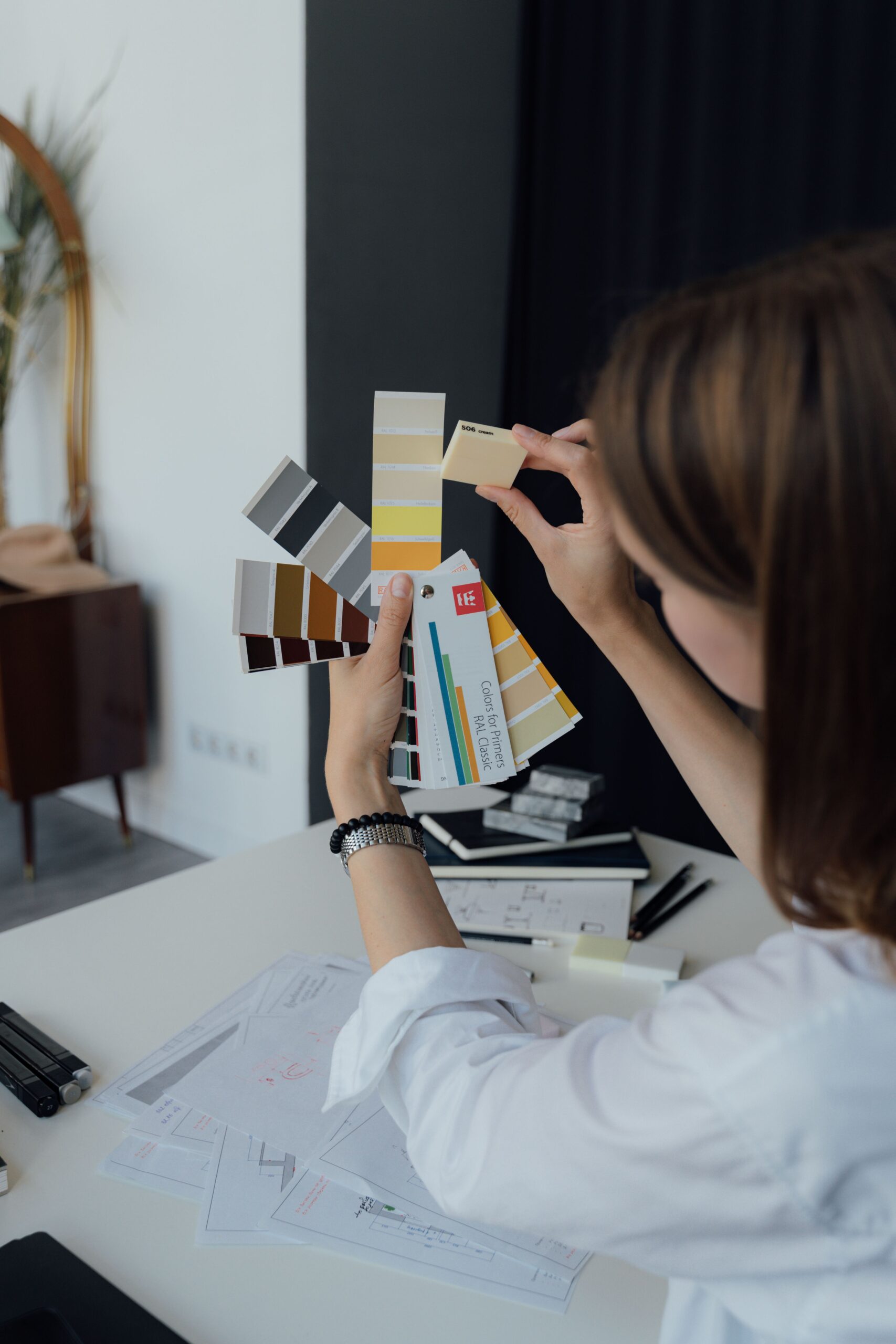

When is it worth hiring an interior designer and how much does such cooperation cost?
From an interior designer’s perspective, commissioning an interior design project is always a great benefit for the investor. Seeing how much stress and worry can be saved, we understand how important it is to plan everything thoroughly before the construction team even cracks the hammer. However, there are cases when an interior design project may not be necessary. But what exactly does that entail?


When is it worth hiring an interior designer?
- When you can’t quite imagine how to design your interior, you have no idea what solutions are used, and how to combine them all,
- when you have no experience working with a renovation team. An interior design plan indicates exactly where to install sockets, lighting, and plumbing outlets. This helps the team carry out the work efficiently, as I don’t have to think twice and ask if this will be the right thing,
When you want to save money. Yes, it’s true, the work of an interior designer can help you save money. Although the service itself is paid, the actions taken by an interior designer not only aim to offer you better solutions, but also at a lower price.
When you want everything planned from A to Z. In good design studios, interior design isn’t just about selecting materials and creating visualizations, but the entire process. It involves thoroughly analyzing the space and selecting the best solutions. Therefore, when you receive a design, every part of your apartment is planned in a systematic manner.
When you simply don’t have the time or want to spend it on something else. The mere fact that someone else is looking for solutions for you is a significant time saver. Navigating the materials from the start takes a lot of time. Just deciding which material is best can drag on for months.
- When you’re having trouble communicating with your partner or family members about finishing touches. An architect, listening to both sides, will select solutions that suit every resident of a given home,


When are we able to cope on our own?
- When we have experience working on construction sites, we know the materials and how to combine them,
- when we know the solutions available on the market and how to apply them in our interiors,
- when we want to put on our CVs that we did everything ourselves, without any help from third parties,
- when we have a lot of free time and the project is very tight budget,
- when we are interior designers ourselves 🙂

What else is good to know?
- The cost of hiring an interior designer is approximately 5% of the total cost of decorating your house or apartment.
- Many people choose not to hire an architect because they want to prove to themselves and others that they know how to choose the right accessories.
- Most people associate the work of an interior designer solely with choosing wall colors, but in reality, it’s a complex process of creating extensive documentation, reviewing materials, and selecting solutions. During our design process, we use at least three programs and two supporting platforms to thoroughly understand our clients’ needs.
- Many people prefer to do everything themselves because they believe it will save them much more money. Unfortunately, when we’re decorating our own homes, we’re more likely to choose materials or solutions based on emotion rather than common sense. This not only ends up being more expensive but also counterproductive.
- The profession of interior architect/designer is a so-called freelance profession. Therefore, anyone can pursue it, even after a weekend course. So if you’re wondering why there’s such a difference in prices between designers, know that the cheapest offers are mainly for those who have completed crash courses. Their main task is to develop decorations and select accessories. Most of them won’t be able to prepare detailed technical documentation, because no one can learn in a weekend what others can during several years of architecture studies.
- Architects specializing in building architecture (i.e., entire building structures or houses) mostly focus solely on the interior appearance and designing buildings in compliance with legal regulations. Very few of them focus on the layout of apartments and their interiors. Unfortunately, this trend is becoming increasingly dominant. This leads to the creation of many shapeless apartments, where it’s increasingly difficult to find the right solutions.